Production-line load
Application: presses, ovens, or lines with a demand spike. Interface question: current transformer ratio and the voltage class, such as 480 V three-phase. RFQ unit: meter channels per line, not a campus license by default.
Plant load, meters, and on-site generation
A factory brief has to say which loads are metered, which interval the historian keeps, and how alarms reach the people who can act during a shift. TerraFlow Supply translates that operating picture into purchase lines. It does not design the one-line diagram.
Production equipment, a rooftop array, a storage block, and a charging yard can share a site. They should not share a single vague line called controls. Each interface stays a separate question for the supplier.
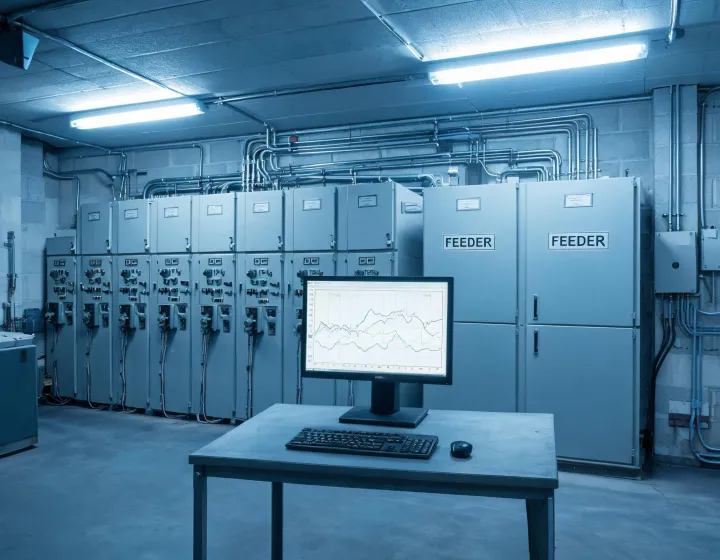
Application: presses, ovens, or lines with a demand spike. Interface question: current transformer ratio and the voltage class, such as 480 V three-phase. RFQ unit: meter channels per line, not a campus license by default.
Application: compressed air and process heat that dominate the bill. Interface question: pulse inputs versus a communicating meter. RFQ unit: input count plus the historian seat for those points.
Application: behind-the-meter generation beside plant load. Interface question: whether the controller exchanges setpoints with a grid-forming inverter or reads a meter without writing setpoints. RFQ unit: integration interface, kept apart from modules and batteries.
Application: alarms that must reach a named shift role. Interface question: email, SMS gateway, or a dry contact. RFQ unit: alarm workflow description and any relay hardware.
Application: reconciling a utility bill with stored intervals. Interface question: which data interval the tariff analysis needs. RFQ unit: export format and retention, written as software scope.
One view favors the lowest unit price when the scope truly matches, because the acquisition line on the purchase order is smaller. The other view favors a comparable delivered scope, because omitted current transformers, freight, historian seats, and drawings show up after award. TerraFlow Supply keeps both columns. It does not pick a winner without the filled sheet.
AC-coupled storage can suit a retrofit where PV and the battery are controlled as separate blocks. DC-coupled storage can remove a conversion stage in a new layout when the power electronics actually support that path. For a factory energy management system the practical question is which setpoints and meters exist, not a slogan about architecture. Rated power, usable capacity, and round-trip efficiency stay on the storage quotation, confirmed for the quoted configuration.
Feeder list, voltage, phase, enclosure rating of any panel device, and the protocol already in the plant.
Channels, gateways, and seats. A spare meter is its own quantity if the stores policy requires one.
Panel labeling, startup visit, and training hours are either in the offer or listed as site labor.
Point list, network drawing, and a statement of alarm latency if the supplier publishes one for that model.
Public background on inverter and grid-service concepts is available from the Department of Energy overview. That page does not certify a factory controller. Continue in the catalog, the interface guide, or the procurement brief.
For a proposed factory pilot, use a bench or a site-approved test segment with the quoted meter, gateway, firmware, and license; qualified personnel decide the safe electrical arrangement. First agree the feeder list, units, timezone, clock source, and acceptance criteria. Then request a read-only recording, for example at a buyer-requested 1-minute interval across one agreed shift, and export the timestamps, values, and missing-data flags. Compare the export to the reference meter log and record gaps with the reviewer and date. The interval is an example, not a product capability or a substitute for the site's requirements.
Keep the operating choice visible: a 15-minute history may suit a billing comparison, while a process team may request finer event records and accept a larger storage or license scope. Neither interval proves that a controller can safely regulate equipment. Agree the required retention, export format, alarm path, recurring fees, and pilot acceptance separately; final controls and cybersecurity approval remain with the responsible project parties.
Describe the feeders, the interval, the destination warehouse or site, and the timing you can actually receive. FREE sourcing support, up to 3%, remains subject to the eligibility statement published on this site. Unresolved code and interconnection items should be named, not dropped.
up to 3%
Eligibility applies to qualified business buyers and is confirmed after we review your product, quantity, destination, and sourcing requirements.